

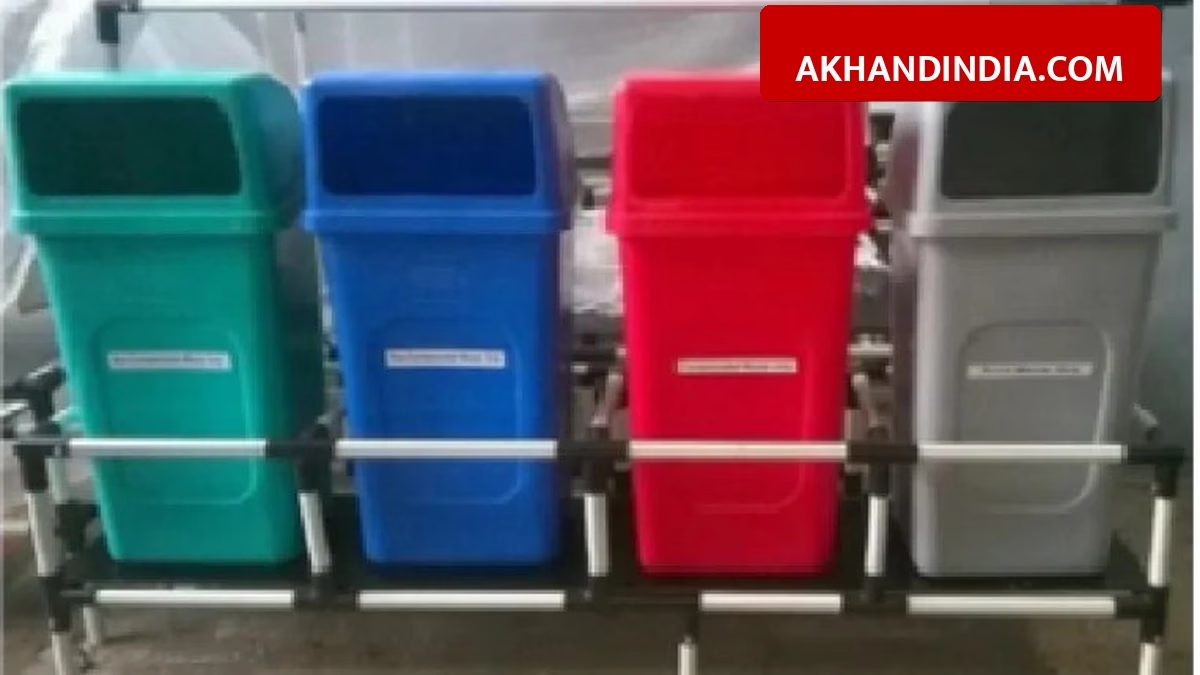

The Union Ministry of Environment, Forest and Climate Change has officially notified the Solid Waste Management Rules, 2026. These new regulations will replace the existing 2016 rules and will come into effect across India starting April 1, 2026. Union Environment Minister Bhupender Yadav announced this major shift, emphasizing that waste must now be sorted into four distinct categories at the source itself.
How to segregate waste under new rules?
Earlier, citizens were required to sort waste into wet and dry categories. Under the new 2026 rules, segregation has been expanded to four specific streams to ensure better processing and recycling.
- Wet Waste: This includes kitchen scraps, vegetable peels, leftover food, meat, flowers, and garden leaves.
- Dry Waste: Items like plastic, paper, metal, glass, wood, and rubber fall into this category.
- Sanitary Waste: Used diapers, sanitary napkins, tissues, and masks must be wrapped securely before disposal.
- Special Care Waste: Hazardous household items such as paint cans, bulbs, batteries, and expired medicines.
Who falls under Bulk Waste Generators category?
The government has placed stricter responsibilities on large entities known as Bulk Waste Generators. An entity is classified as a bulk generator if it meets any one of the specific criteria set by the ministry.
- Built-up Area: Premises with an area of 20,000 square meters or more.
- Water Consumption: Entities consuming 40,000 liters or more of water daily.
- Waste Generation: Those producing 100 kg or more of solid waste every day.
This list includes government departments, hotels, malls, educational institutions, and large residential societies. They must ensure the environmentally friendly collection and disposal of their waste.
What are the fines and penalties?
Strict actions will be taken against those who do not follow the new guidelines. The rules operate on the Polluter Pays principle to ensure accountability.
- Fines: Violations can attract a fine of up to ₹20,000 under the related 2025 Bill.
- Imprisonment: Serious offenses may lead to imprisonment for up to three months.
- Compensation: Environmental compensation charges will be levied for providing false information or operating without registration.
