
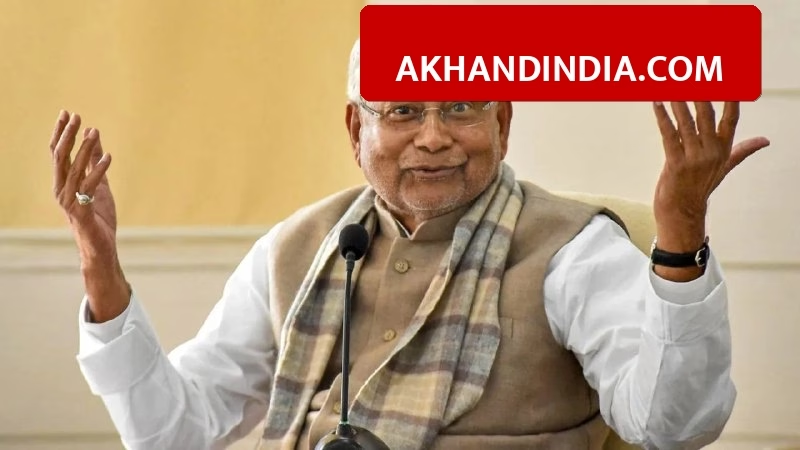

Bihar Chief Minister Nitish Kumar has announced a major update for higher education across the state. The government has decided to open degree colleges in every block that currently lacks one. This decision aims to help students, especially girls in rural areas, access higher education closer to their homes. The administration has been instructed to ensure that classes in these new institutions begin from July 2026.
Which blocks will get new colleges?
There are a total of 534 blocks in Bihar. Official data reveals that 213 of these blocks do not have any constituent or affiliated degree college at present. The government has identified these specific areas for the first phase of the project. This initiative is a key part of the ‘Seven Resolves-3’ scheme, specifically falling under the resolution focused on advanced education and a bright future.
What is the budget and timeline for the project?
The state government presented a budget of ₹3.47 lakh crore on February 3, 2026. Out of this, the Education Department has received an allocation of ₹60,954 crore for the financial year 2026-27. The Chief Minister announced this plan on February 4 and directed officials to work on a war footing.
- Start Date: The target is to start the academic session in the new colleges by July 2026.
- Centers of Excellence: 55 old and reputed institutions will be upgraded to ‘Centers of Excellence’.
- University Funds: Patna University and LNMU will receive ₹100 crore each to become model universities.
- Student Loans: The Student Credit Card Scheme offering interest-free loans up to ₹4 lakh will continue for students.
Who will manage the construction and rules?
The newly formed Higher Education Department will oversee the implementation of this plan. The Bihar State Educational Infrastructure Development Corporation (BSEIDC) will be responsible for constructing the college buildings. According to the standards set by Raj Bhavan, setting up a degree college requires 5 acres of land in rural areas and 2 acres in urban areas. The primary goal is to increase the Gross Enrolment Ratio (GER) in higher education across the state.
