

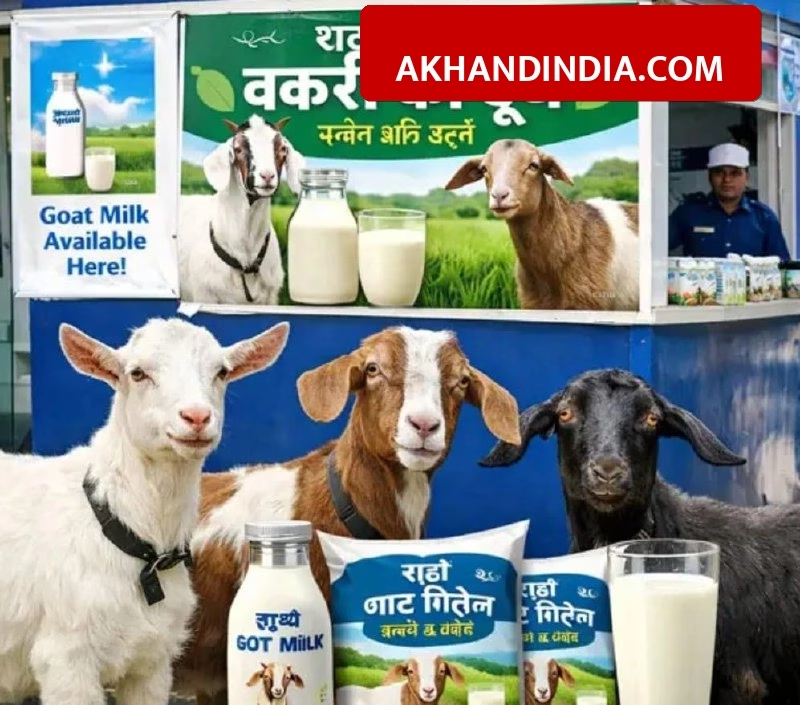

The Bihar government has launched a new initiative to boost rural income and make healthy milk accessible to the public. For the first time, Sudha Dairy booths will sell goat milk commercially alongside cow and buffalo milk. Under the Integrated Goat and Sheep Development Scheme for 2025-26, the state is also providing up to 90 percent subsidy to farmers for goat rearing. This move establishes a direct supply chain where livestock owners can sell goat milk directly to COMFED (Sudha).
Where will goat milk be available?
In the first phase, the sale of goat milk will begin in five major districts. These include Bhagalpur, Muzaffarpur, Gaya, Darbhanga, and Purnia. Secretary Shirsat Kapil Ashok stated that the long-term goal is to set up Sudha booths in every panchayat by the end of the 2026-27 financial year.
Goat milk is widely known for its health benefits, especially for increasing platelet counts during Dengue. This initiative aims to make it affordable and accessible for the common man in cities.
How much subsidy is the government giving?
The government has fixed the cost of one goat unit at 15,000 rupees. One unit includes three high-quality breeding goats, typically of the Black Bengal breed. The subsidy structure is designed to help different communities.
- General category families receive an 80 percent subsidy, meaning they only pay 3,000 rupees.
- SC and ST families receive a 90 percent subsidy, meaning they only pay 1,500 rupees.
- Applicants must be permanent residents of Bihar with an annual income below 1.25 lakh rupees.
The animal husbandry department aims to triple the income of nearly 7,892 families selected in the first round. Women and those who have not received similar benefits before will be given preference.
Market integration and future plans
Minister for Dairy, Fisheries, and Animal Resources, Surendra Mehta, formalized these plans during a recent workshop on climate-resilient goat rearing. A state-level Goat Federation is currently being established to oversee this expansion across the state.
Technical partners, including the Bihar Animal Sciences University and the Central Institute for Research on Goats in Mathura, will train specialists to assist local farmers. The department is also working on a separate proposal to market goat meat systematically through local urban bodies.
