

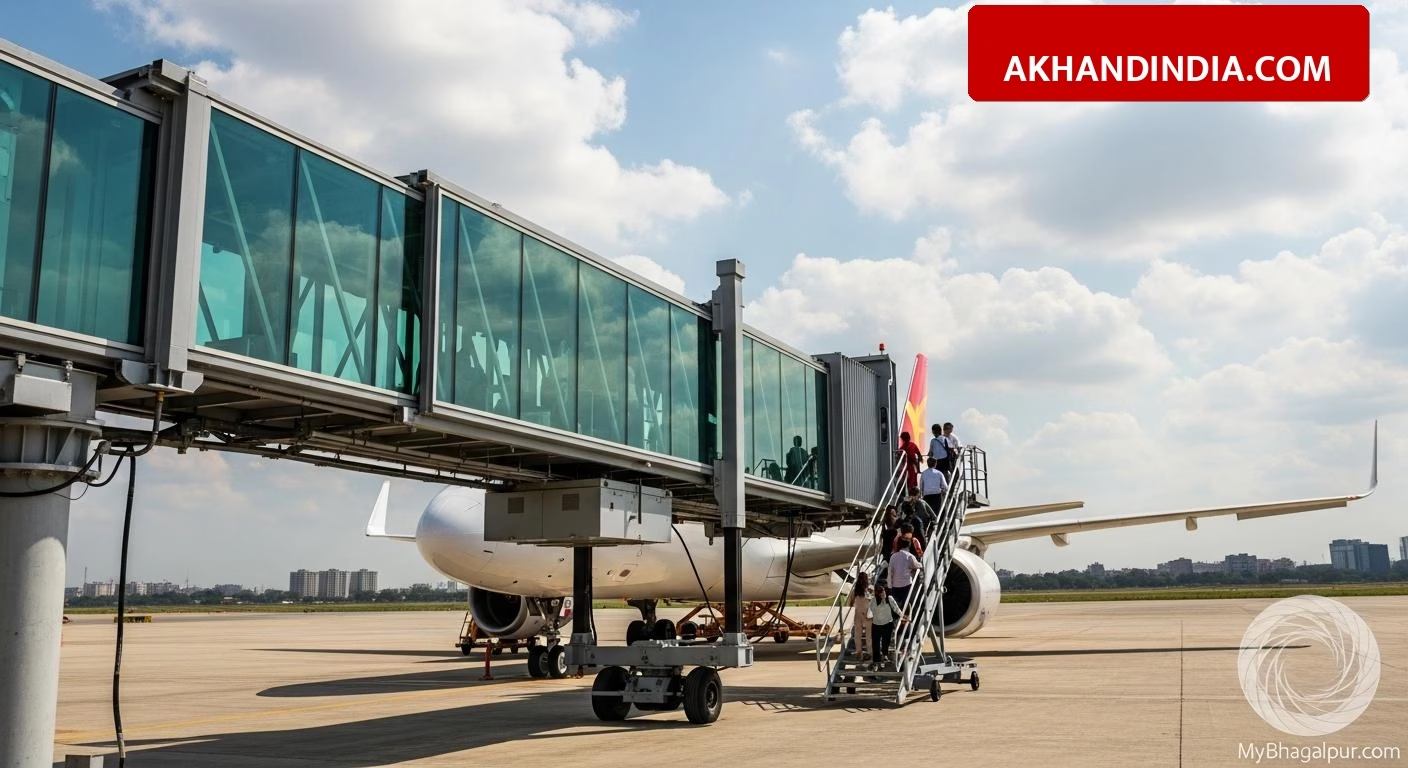

Travelers flying from Patna Airport will now experience a smoother boarding process. The Airport Authority of India (AAI) has made all five aerobridges fully operational at the Jay Prakash Narayan International Airport. The fourth and fifth bridges started functioning on January 31, 2026. This development marks the end of the old system where passengers had to take buses to reach the aircraft from the terminal building.
How does direct boarding help passengers?
The primary benefit is the elimination of the ‘two-step boarding’ process. Previously, flyers had to wait for a bus after the security check and then climb stairs to enter the plane. Now, passengers can walk directly from the boarding gate into the flight through the aerobridge. This facility is particularly helpful for the elderly and those traveling with children.
Recent reports suggest that the boarding time for flights has reduced by approximately 30-40% since the bridges became active. This system also provides much-needed relief during bad weather conditions. Passengers are no longer exposed to rain or cold winds while moving from the terminal to the aircraft. Departures are now handled from the first floor, while arrivals remain on the ground floor.
Project costs and new charges
The new Integrated Terminal Building (NITB) was constructed with an investment of roughly ₹1,217 crore to upgrade the infrastructure. With these new facilities, the administration has also outlined the fee structure. Official data indicates that from April 1, 2026, the User Development Fee (UDF) for domestic passengers will be ₹900 per departure.
For visitors coming to drop off or pick up passengers, the parking rates are defined at the multi-level parking zone. The fee for parking a car is ₹20 for the initial 30 minutes and increases to ₹55 for a duration between 30 to 120 minutes. The new apron area can now accommodate parking for 11 aircraft, which helps in managing more flights.
