

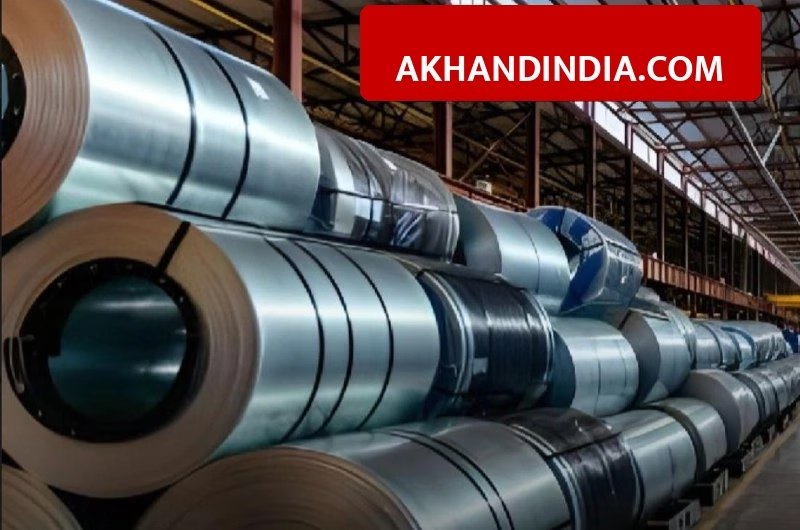

Bihar is set to witness a major industrial development that promises to boost the local economy. Shyam Steel Manufacturing Limited has officially proposed an investment of ₹5,000 crore to set up a massive integrated steel plant in the state. This new facility is planned for the Gaya-Dobhi Road Industrial Corridor. The project aims to produce 10 lakh tonnes of steel every year and is expected to create employment for thousands of people, reducing the need for locals to travel to other states or abroad for work.
What are the key details of the proposed plant?
Lalit Beriwala, the Director of Shyam Steel, formally submitted the proposal to the Bihar Industries Department. The company has identified the Gaya-Dobhi road near the Jharkhand border as the ideal spot and has requested 500 acres of land for the project. To keep the plant running smoothly, the company has also sought 50 MW of power and a daily water supply of 2 million gallons (MGD).
The raw materials for this plant will come from neighboring states. The company plans to source iron ore from Odisha and coal from Coal India Limited. The state government has assured that land conversion and other official approvals will be handled on a priority basis to speed up the process.
How will this benefit the people of Bihar?
The biggest impact of this project will be on employment. It is estimated that 8,000 direct and indirect jobs will be generated once the plant is operational. This aligns with the government’s goal of “Ghar Wapsi” for workers who usually migrate to Arab countries or metro cities for high-risk manual labor.
Project Highlights:
- Investment Amount: ₹5,000 Crore in phases
- Location: Gaya-Dobhi Industrial Corridor
- Production Capacity: 10 Lakh Tonnes (1 MTPA)
- Job Creation: 8,000 Jobs
Industries Minister Dr. Dilip Kumar Jaiswal stated that the government is rolling out a “Red Carpet” policy to welcome such investors. Additionally, Deputy CM Samrat Chaudhary announced a new rule where the Bihar government will prioritize purchasing construction materials from companies that have manufacturing units within the state.
