


What’s inside:
This article discusses the recent political reaction to the UGC Act 2026 and the Supreme Court’s stay on it.
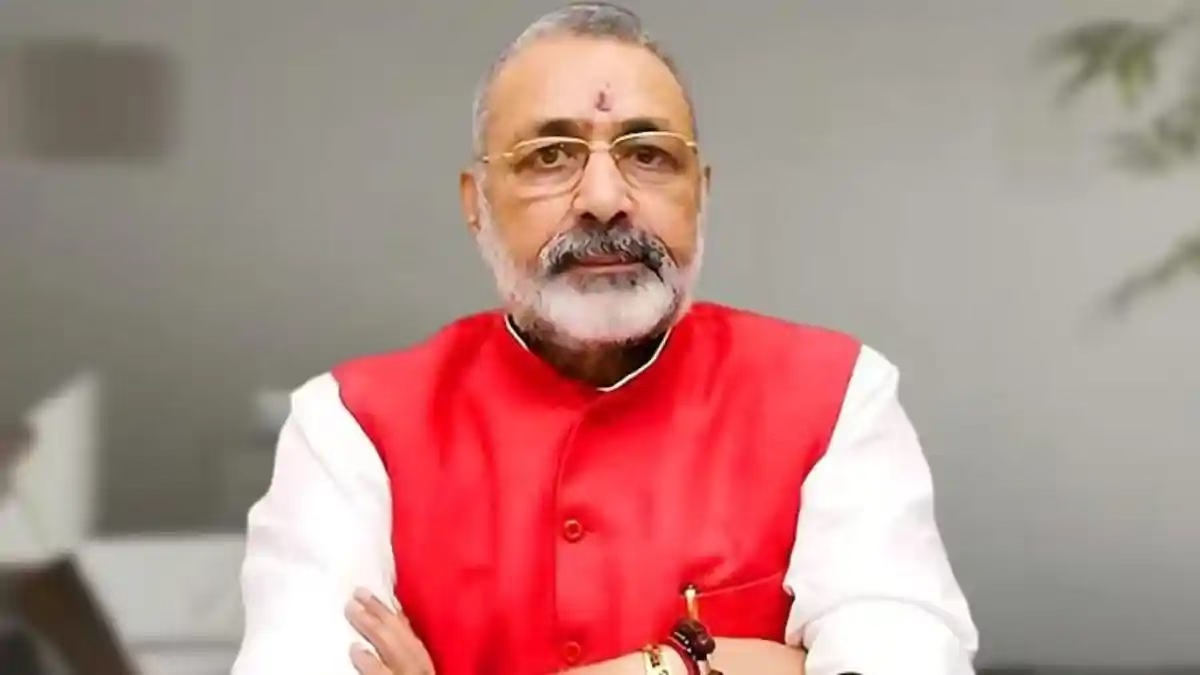
There’s a lot of political drama happening in India about the new UGC Act 2026. Recently, the Supreme Court put a hold on this law, which has led to various reactions from politicians. Among them, Union Minister Giriraj Singh from Bihar has finally spoken up, describing the law as one that divides Sanatan, which refers to eternal values.
Giriraj Singh took to Twitter to express his gratitude to the Supreme Court for this stay, suggesting that the law threatens the cultural unity of India. This statement has stirred up social media, with many users questioning why he remained silent when the law was actually in place. Critics are pointing out the timing of his comments.
The confusion around the UGC rules had been causing unrest in the country for some time. Interestingly, many political leaders in Bihar had not addressed this issue until now. Even when reporters confronted Union Minister Lalan Singh at Patna Airport, he chose not to comment and walked away.
According to the Supreme Court, the UGC Act could lead to discrimination under the guise of equality. The court emphasized that this issue is more than just policies; it relates to the very essence of the Constitution. They have asked the government to respond to their concerns about the law.
As Giriraj Singh faces backlash for his delayed response, the public is keenly watching how the government will address the Supreme Court’s comments. The situation remains tense as the court’s decision has significant implications for the future of this law and its impact on the Indian society.
Summary:
- The Supreme Court has put a stay on the UGC Act 2026.
- Giriraj Singh has criticized the law for dividing Sanatan.
- Many leaders in Bihar remained silent about the issue until now.
- The Supreme Court highlighted potential discrimination from the law.
- Public and political attention is now focused on the government’s response.
