

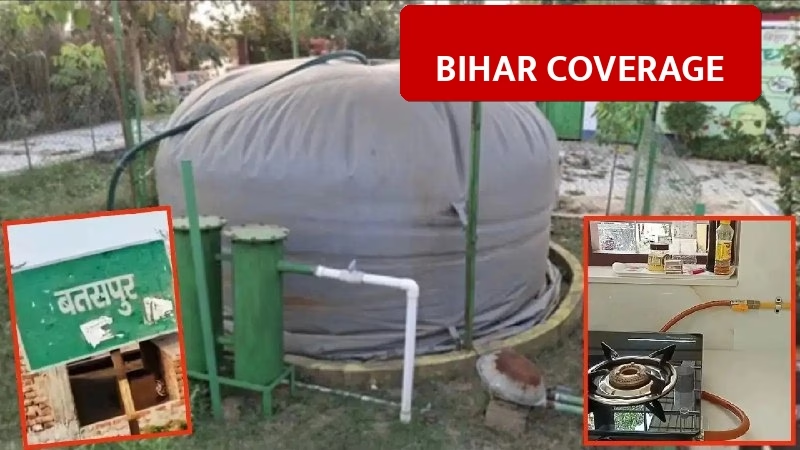

Bataspur village in Bodhgaya block has emerged as a major model of self-reliance for Bihar. Residents in this village are no longer worried about the rising prices of LPG cylinders or supply shortages. Under the GOBARdhan scheme, gobar gas is being supplied to 50 households, providing a clean and affordable alternative to traditional cooking fuels. This initiative has significantly improved the quality of life for the rural population while promoting cleanliness.
Financial Model and Benefits for Villagers
The plant operates on a sustainable economic model where cattle owners sell dung to the facility at a rate of 50 paise per kilogram. Families who provide dung to the plant receive the gas free of cost. For other households, the gas is available at 25 rupees per unit, which is approximately half the price of a standard LPG cylinder. Additionally, the plant produces bio-slurry, which acts as a high-quality organic fertilizer for farmers, helping them reduce expenses on chemical fertilizers.
Official Implementation and Project Data
The plant was established in 2023 under the second phase of the Swachh Bharat Mission (Grameen). Chief Minister Nitish Kumar inaugurated this facility during his Progress Journey. The project was built with a total investment of around 50 lakh rupees and is managed with the help of local self-help groups. Bihar Rural Development Minister Shravan Kumar mentioned that this pilot project has been successful and the government intends to expand this model to other districts soon.
| Key Feature | Details |
|---|---|
| Village and District | Bataspur, Gaya District |
| Scheme Name | GOBARdhan (SBM-G Phase 2) |
| Setup Cost | Approximately 50 Lakh Rupees |
| Gas Pricing | Free for dung providers or 25 Rs per unit |
| Nodal Ministry | Ministry of Jal Shakti, Government of India |
| Main By-product | Bio-slurry (Organic Fertilizer) |
Impact on Health and Environment
Local women including Chanchala Devi and Nirmala Devi shared that the gobar gas system has saved them from the harmful smoke of traditional stoves. This shift to clean energy has reduced respiratory health risks and kept the village surroundings clean by effectively managing animal waste. The involvement of Jeevika Didis in managing such plants is also creating new employment opportunities in the rural areas of Bihar.
